Happy Chinese new year!
A bit late, but we still celebrated Chinese new year at our local Chinese restaurant. With help from Ben and Claire a feast of exotic flavors and custom orders! Thanks!

Yummy! We also tried the rotating board in the middle to share, but we still need practice in sharing. My first keynote lecture
Extremely grateful to be invited to Thessaloniki in the midst of winter by George Mosialos to give a plenary lecture at the annual meeting of the Hellenic Society for Biochemistry and Molecular Biology. Not only was it a dream to be away from the cold in Germany, but also the selection of invited speakers (my talk was paired with Michael Hall!), the first class treatment and the gorgeous location were absolutely worth the trip. Only downside: some talks were in Greek, which is not my strongest language 🙂
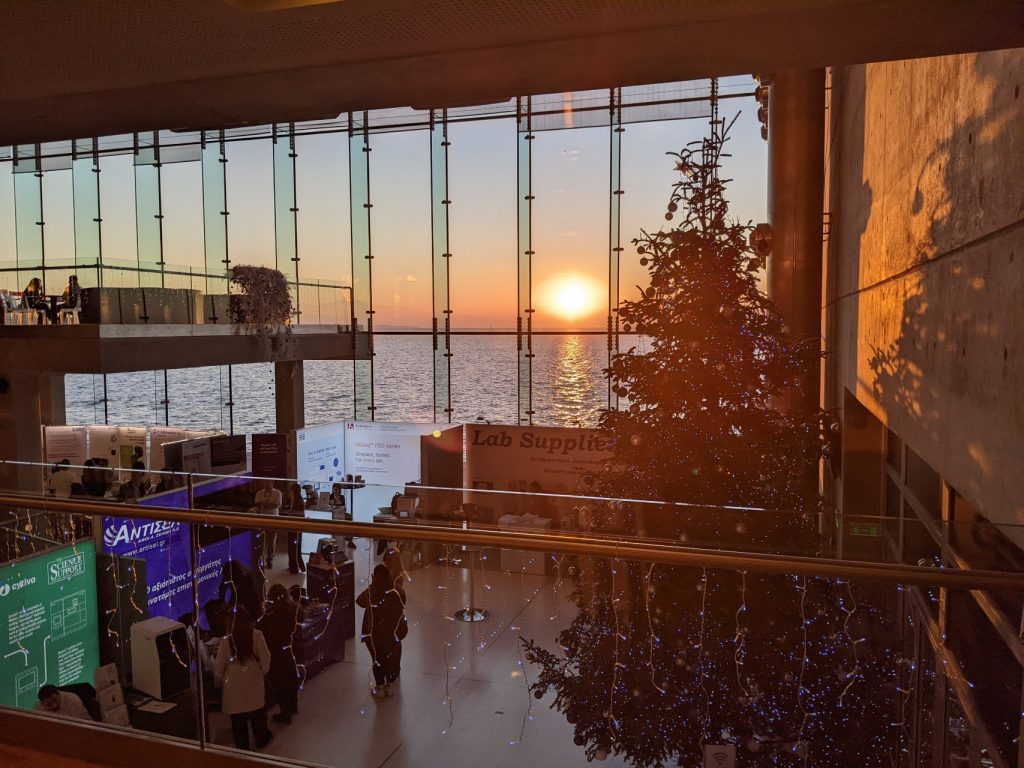
Such a great location at the Thessaloniki Concert Hall 
This made my introduction into AMPK/mTOR signaling really easy 🙂 It’s Christmasmarket time
This time around we went to the Christmasmarket around the corner from Viktualienmarkt, where they have a record-winning-sized cauldron with Feuerzangenbowle (flaming fire tongs punch, basically mulled wine laced with rum and caramelized sugar). Very tasty and interesting lighting, but lacking in vegetarian food options. I had to leave early because I had a little companion with me who got cold…unfortunately, no Feuerzangenbowle for her to keep her warm 🙂
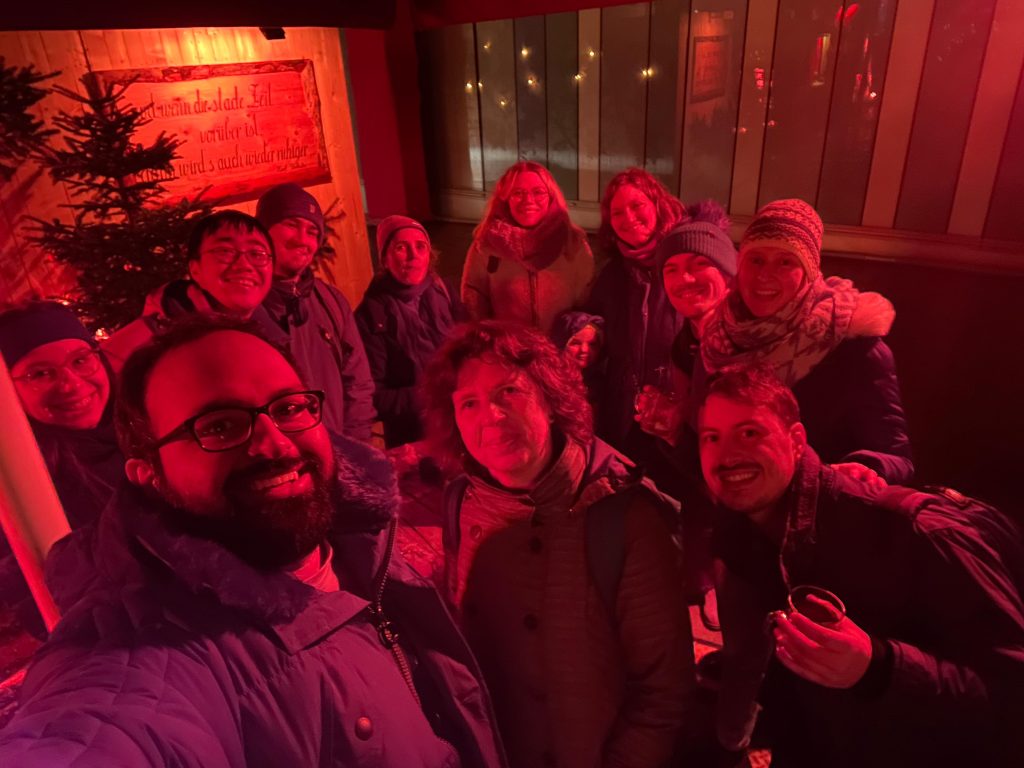
The light makes us look more drunk then we were… Bye-bye Simone
We had to say fare-well to Tabitha at her defense in July, but for Simone we needed to be extra and celebrate her thesis and her moving on in several stages! One good-bye dinner at Moti Mahal in Martinsried, one more lunch at her very last day in the lab and the final celebration will be when she returns to defend her thesis sometime early next year. Until then have a happy start at the MRC in Cambridge! May the mighty mitochondria always be with you!
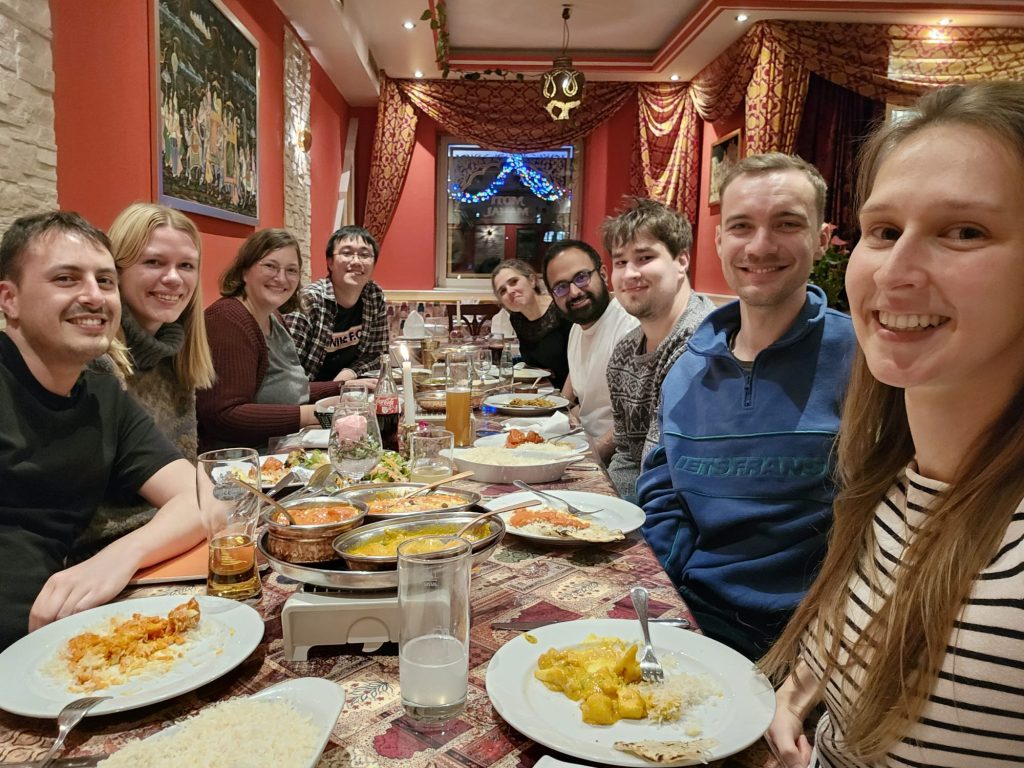
Tasty meals, happy faces. Happy halloween
Because we really enjoyed the werewolves game at our retreat, we did an encore – Halloween edition! On the night of the 31st, spooky creatures gathered in the seminar room to save themselves, the institute and the world, from evil werewolves…or did everyone turn into one? Thanks to Hari for being the creative master mind behind this special setting and Tabitha for her cameo!
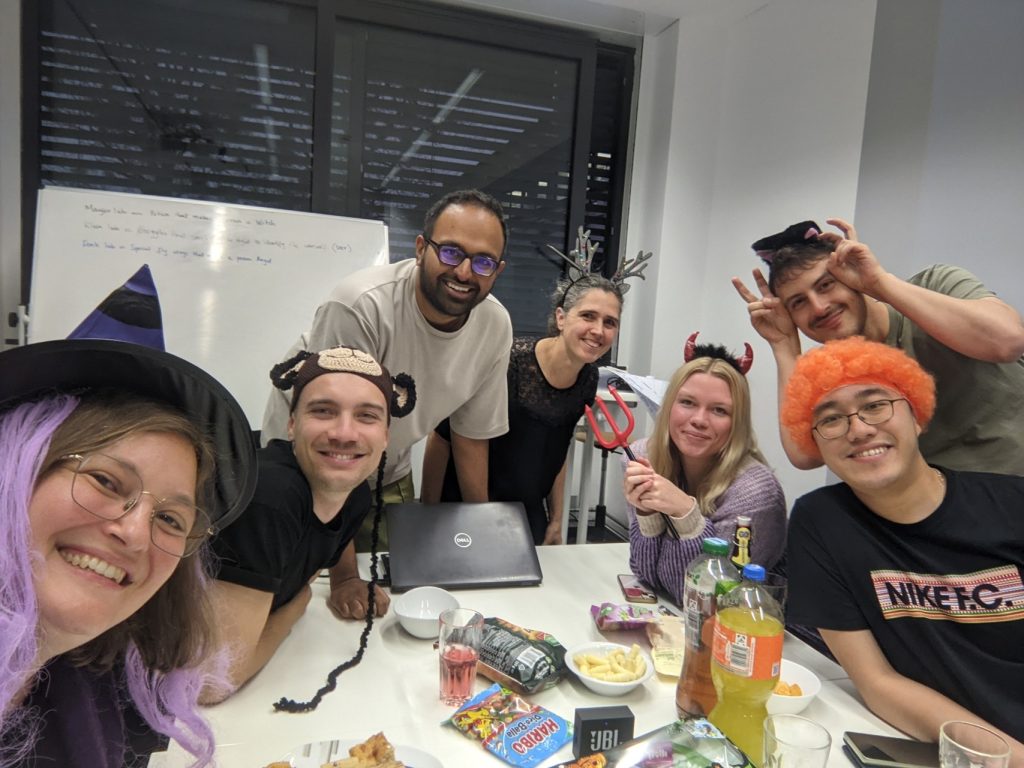
Head dresses courtesy of my private stash. Good news just keep coming
I am so proud of my lab…Alina, despite a having her leg in a cast, flew to Edinburgh because she was selected for a short talk at the meeting on “Membrane contact sites in cellular homeostasis“. And Marlena went to two meetings back to back, and even won the Poster prize at the European Cell Death Organization (ECDO) conference on “Cell Death at the Crossroads of Neurodegeneration and Cancer” in Luxembourg. WE ROCK!
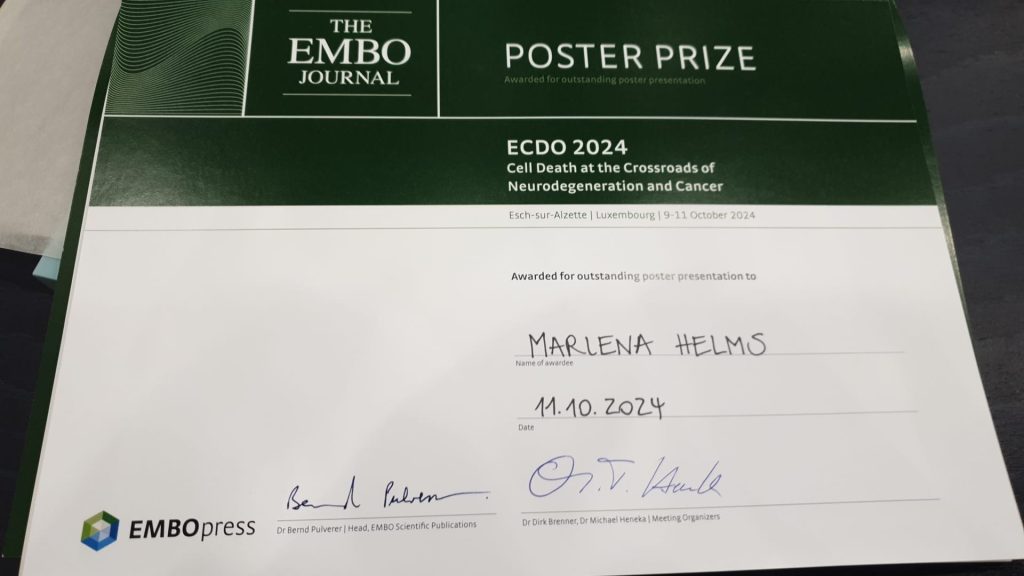
Photo session with Axel Griesch
Even though most of the lab was absent on several meetings and retreats, we still took advantage of photographer Axel Griesch visiting our institute. He took amazing pictures of things that are normal for us, but now make us look very cool 🙂 Especially the shots in the cold room…*brrrr*
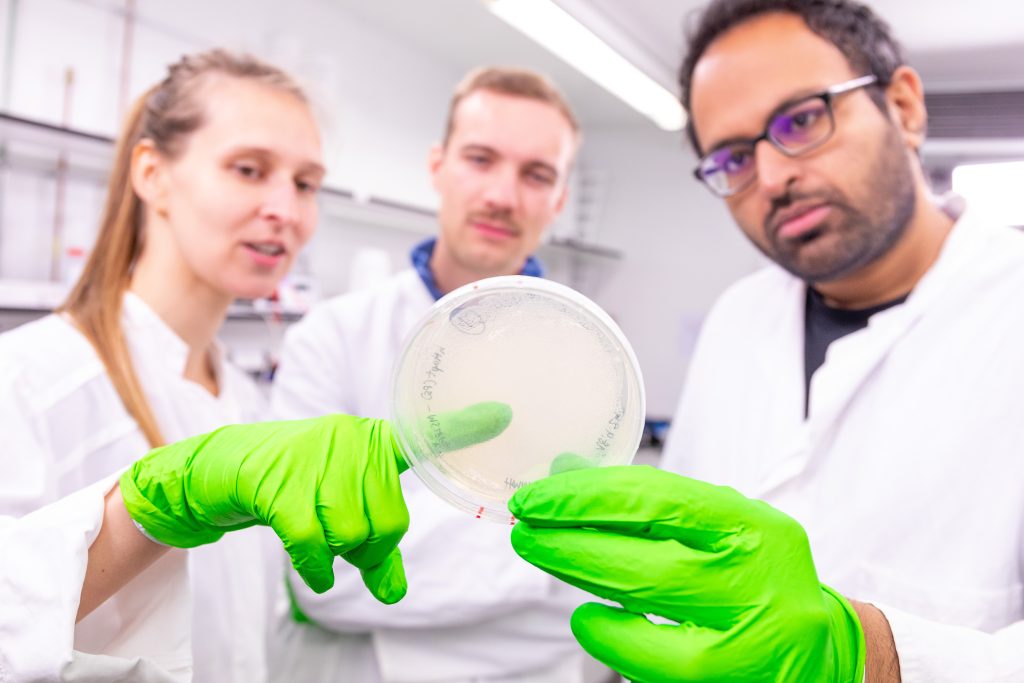
Did they get a clone? 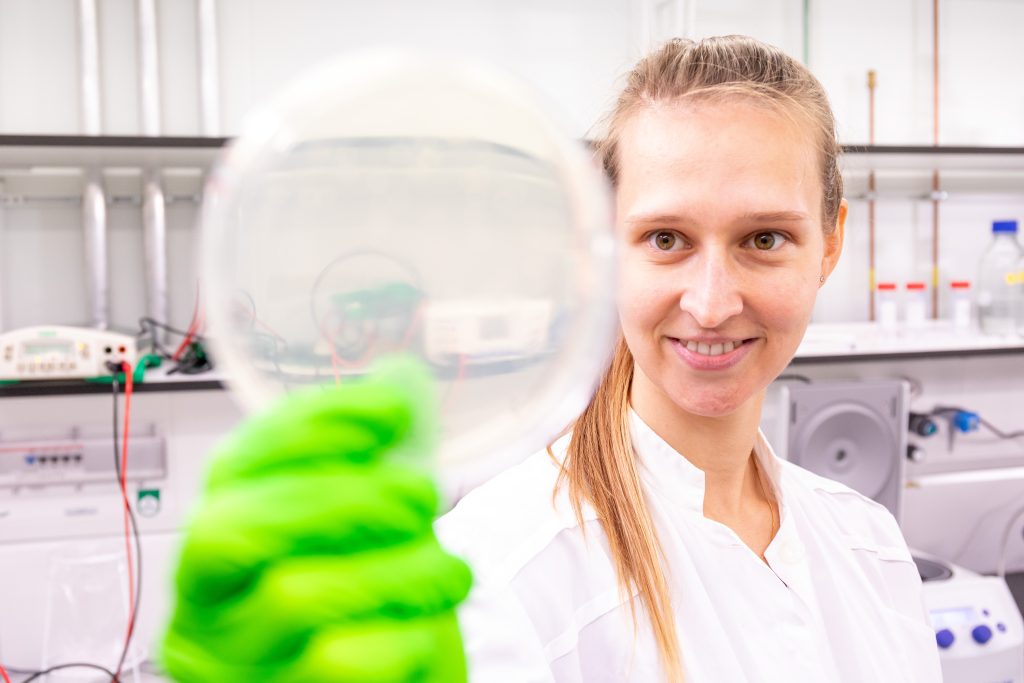
Alina looks happy with her bacteria! 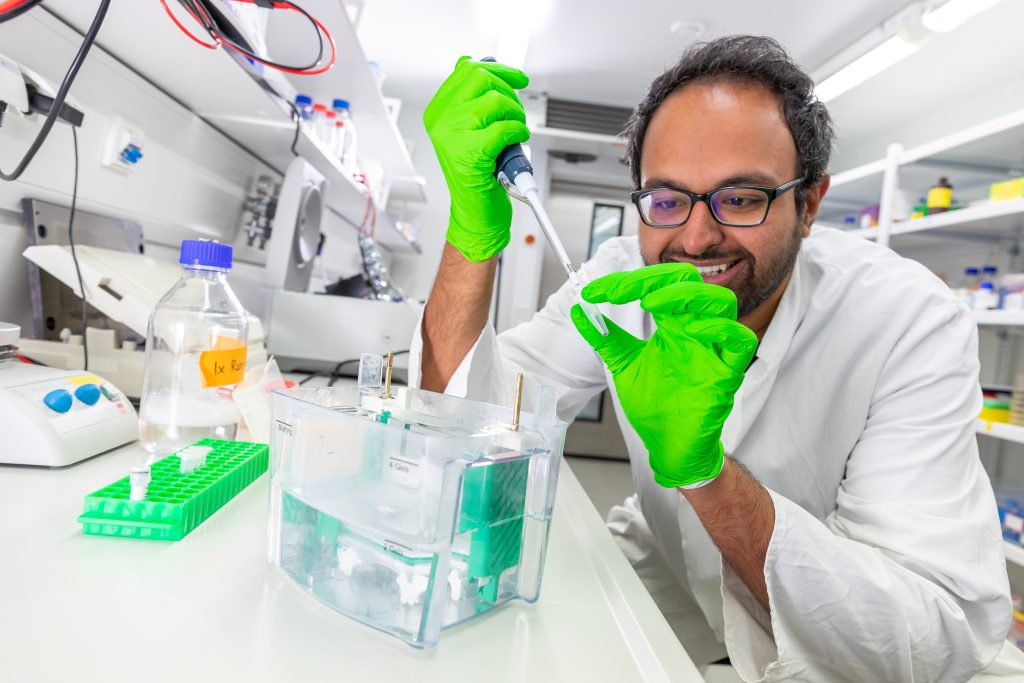
Still smiling, even though its cold. 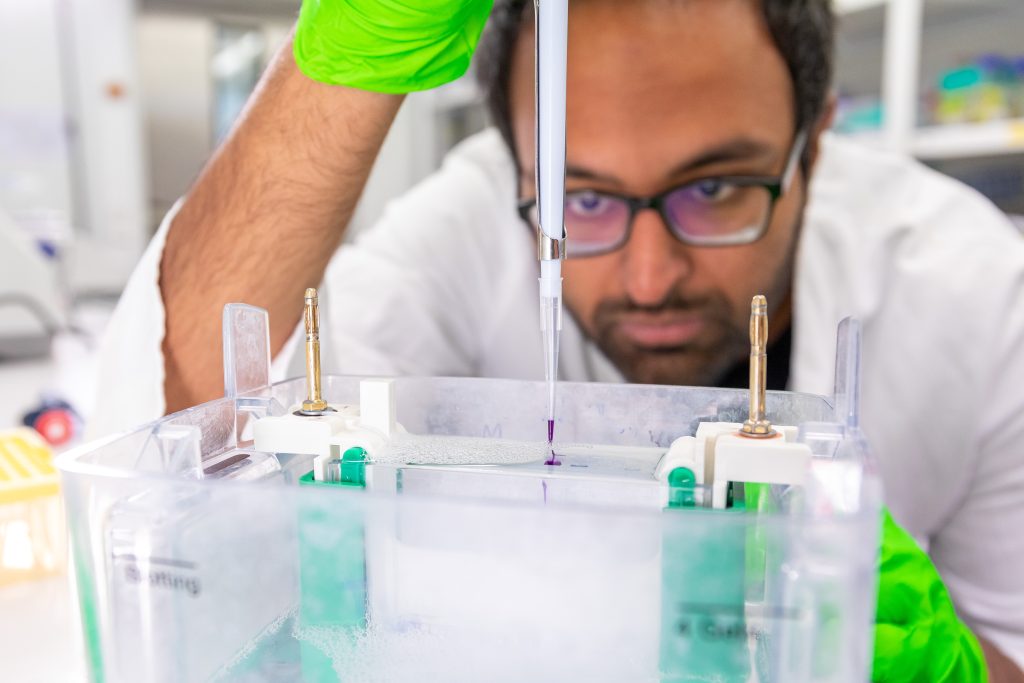
Laser focus when loading an SDS PAGE. 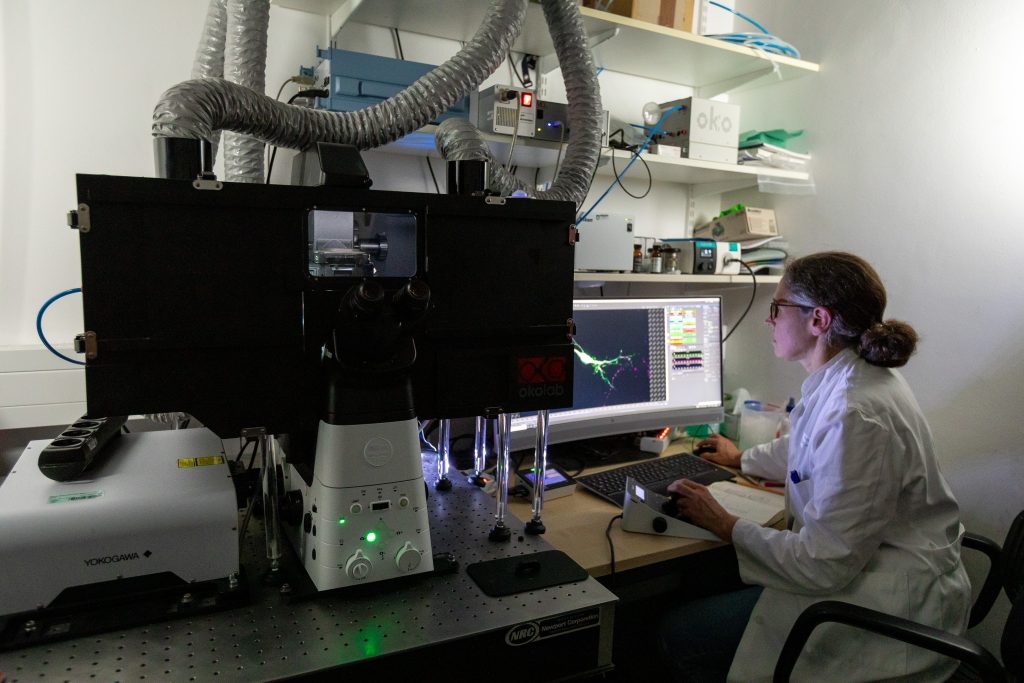
Live cell imaging at the spinning disk. 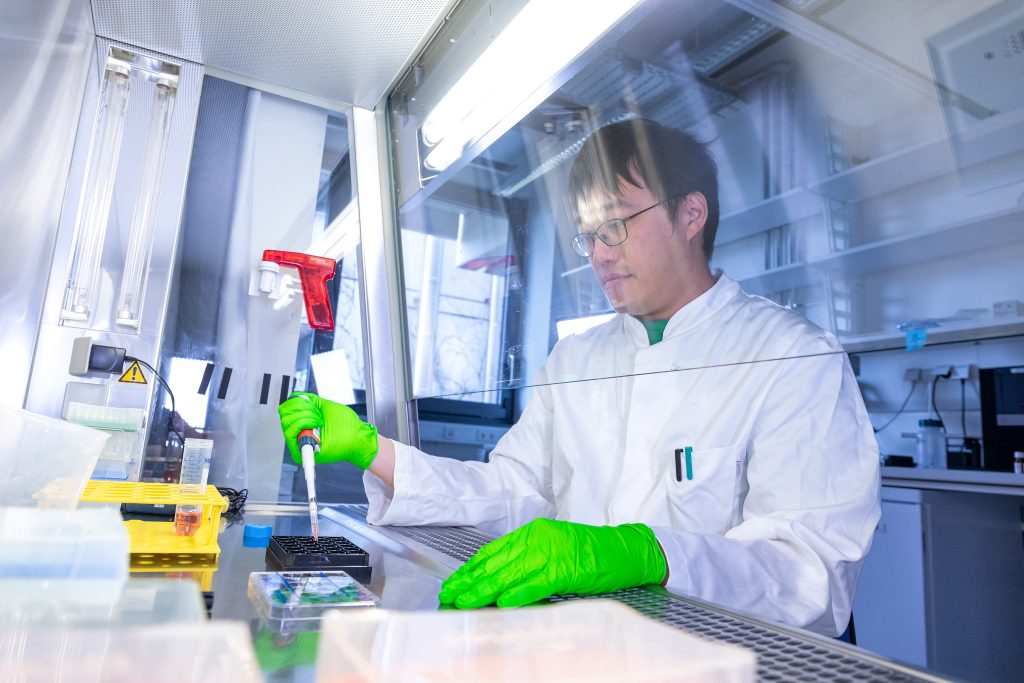
Cell culture from the cells’ perspective Retreat with AG Behrends
Time for another retreat at the TUM Research Station Friedrich N. Schwarz in Berchtesgaden! This time we invited our friends from the Behrends lab at the LMU. We brainstormed a lot about autophagy and post-translational modifications and how everything can work in neurons, but also enjoyed the beautiful nature and rich history of our surroundings. We had crazy weather…20 degrees sunshine (perfect for a ride on the alpine roller coaster), pouring rain and even a few centimeters of snow in September! And crazy fun playing werewolves at night.
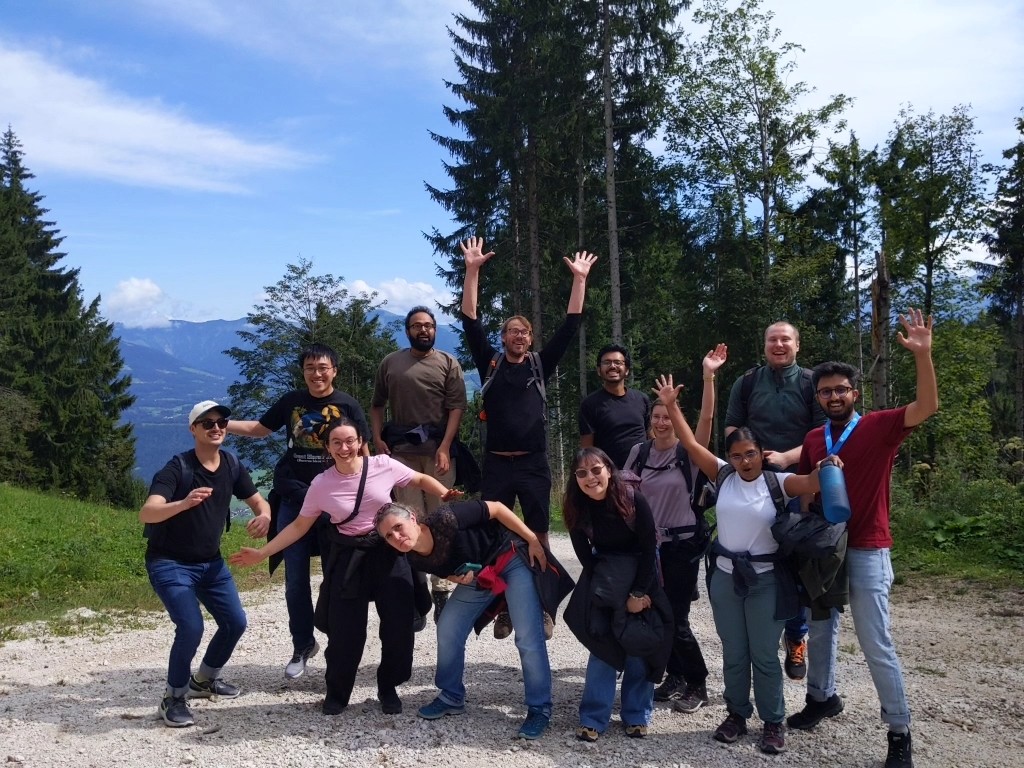
Crazy times with fun people! Congratulations, Dr. Tabitha Hees
With great pride I watched the first defense of my lab, starring Tabitha! As expected, she gave an excellent talk and had answers to all our questions, so no wonder she got awarded the best possible grade (summa cum laude). And on the side she (with a little help from her friends) also organized a fantastic all-day-long defense party with amazing food, games and a lovely group of people. What a great day for the lab!
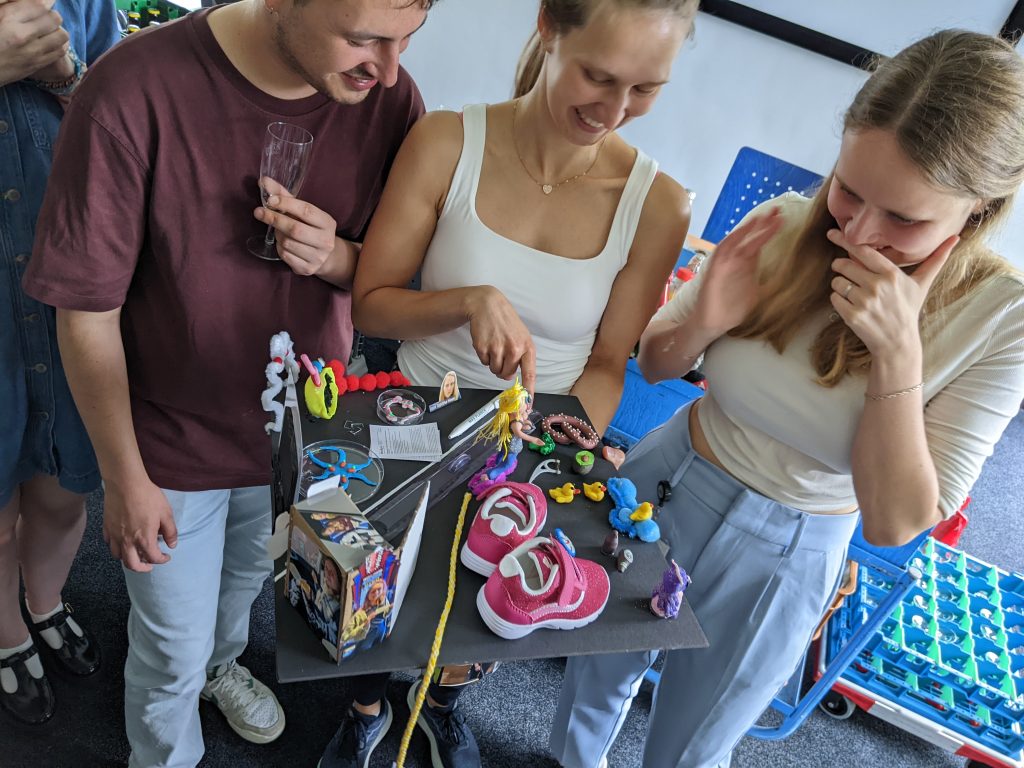
All the little details make Tabitha’s PhD hat a beautiful work of art, science and friendship! Pink surfin’ on the ER
The ER plays an active role in the biogenesis of the #Parkinson protein PINK1 in stabilizing its precursor on its way to #mitochondria in neurons. #mitophagy New preprint from my lab on BioRxiv!
Here Inma and Tabitha used the power of SunTag imaging to visualize where in a neuron PINK1 is being translated…and it turns out, that one organelle is not enough! PINK1 translation occurs at three-way contact sites between mitochondria, the ER and endolysosomes. And to find its way back to mitochondria, the PINK1 preprotein needs the help of ER-associated chaperones, as in the ER-SURF pathway described in yeast.

A pink surfer on ER tubules, trying to make its way to mitochondria. Created with deepAI.org
Welcome to the Harbauer Laboratory